

Table of Contents
- Comparison Table: High Quality Cases for Sports Cards
- How to Store Graded Sports Cards for Long-Term Protection
- Best UV Protection for Sports Cards: What 95% Blocking Actually Means
- Magnetic Card Holder vs Screw Down: Which Protects Your Slab Better?
- Pricing Breakdown: What to Expect from High Quality Cases
- Insurance, Valuation, and Archival Safety for High-Value Collections
- Frequently Asked Questions
Last Updated: September 16, 2026
Comparison Table: High Quality Cases for Sports Cards
A high quality case for sports cards is a rigid, protective enclosure engineered to hold a graded slab or raw card securely while blocking light, dust, and impact. At PrismGuard Pro, we build ours around three non-negotiables: impact-resistant shells, roughly 95% UV blocking, and a precision fit that stops slab rattle.
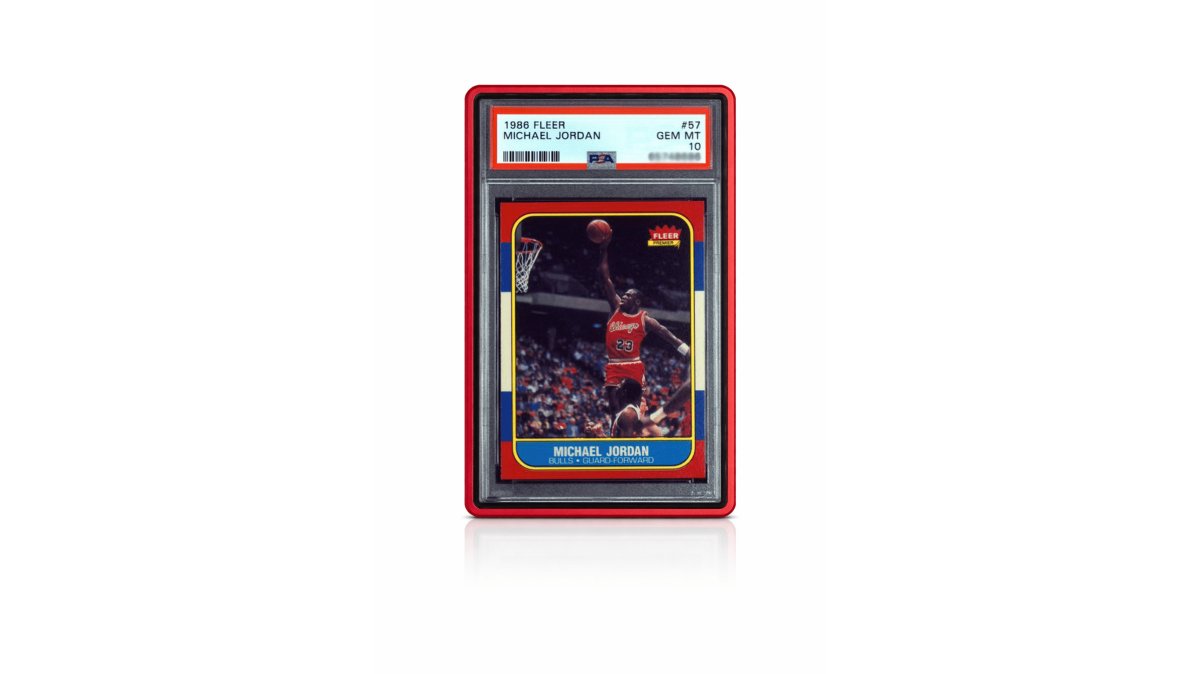
Here is how the four PrismGuard Pro options compare.
| Case | Fits | Protection | Price |
|---|---|---|---|
| PSA Magnetic Slab Case | PSA slabs, CGC with PerfectFit strips | 95% UV, shock-absorbing shell | $16.99 |
| BGS Magnetic Slab Case | BGS slabs | 95% UV, shock-absorbing shell | $16.99 |
| CGC Magnetic Slab Case | CGC slabs | 95% UV, impact-resistant shell | $16.99 |
| Magnetic One-Touch Case | Standard-size one-touch magnetic holders, including BCW | 95% UV, impact-resistant shell | $16.99 |
How to Store Graded Sports Cards for Long-Term Protection
Storing graded sports cards well comes down to four habits: keep slabs vertical or flat but never stacked under weight, out of direct sun, away from humidity swings, and inside a case that holds the slab without movement. That is the baseline every collector hears. The part most guides skip is why each habit matters and what the actual failure mechanisms look like over a ten- or twenty-year horizon.


The four failure modes that actually damage stored slabs
- Surface abrasion. Slabs slide against each other in a box or against a shelf edge. Over years, that produces the fine haze collectors call "slab scuffing." A case with a precision-fit interior stops the slab from moving, which is the only real fix.
- UV fade. Ultraviolet light bleaches ink and yellows the plastic over time. A case that blocks roughly 95% of UV slows this dramatically, but the remaining exposure is cumulative, so placement still matters.
- Humidity cycling. Paper stock and the card's coating expand and contract at different rates as humidity swings. Repeated cycling can lift corners or create a subtle wave in the card surface. Stable indoor conditions (most homes sit in a comfortable range year-round) do more than any desiccant pack.
- Pressure fractures. Stacked slabs transfer weight to the corners of the slab below. That is where hairline cracks start. Vertical storage in rows eliminates the load path entirely.
Archival safety: what "acid-free" and "chemically stable" actually mean
For long-term preservation, the material matters as much as the shell.
A practical storage sequence
- Confirm the slab is clean and dry before it goes in.
- Seat it in a case sized to that specific grading service, PSA, BGS, and CGC slabs are not interchangeable.
- Store upright in rows, not flat in stacks.
- Keep the shelf out of direct sun and away from exterior walls, which swing more in temperature than interior walls.
- Rotate displayed cards every few months so no single card absorbs the same light angle year after year.
When to upgrade from a box to a case
A standard cardboard or plastic storage box is fine for low-value raw cards you rarely handle. The upgrade trigger is simple: once a card is graded, once it is worth insuring, or once you handle it more than a few times a year, a rigid case pays for itself.
Best UV Protection for Sports Cards: What 95% Blocking Actually Means
The best UV protection for sports cards is a case that blocks the vast majority of ultraviolet light while staying optically clear. PrismGuard Pro cases block approximately 95% of UV exposure, which is the number that matters when a card sits on a shelf near a window for years.
Magnetic Card Holder vs Screw Down: Which Protects Your Slab Better?
A magnetic closure lets you open and reseat a slab without tools, and repeated access does not wear the case the way threaded hardware does.
Pricing Breakdown: What to Expect from High Quality Cases
Expect to pay around $16.99 per case for a collector-grade slab case. Every PrismGuard Pro case sits at that price, whether you need PSA, BGS, CGC, or a magnetic one-touch format.
| Need | Recommended Case | Price |
|---|---|---|
| PSA-graded cards | PSA Magnetic Slab Case | $16.99 |
| BGS-graded cards | BGS Magnetic Slab Case | $16.99 |
| CGC-graded cards | CGC Magnetic Slab Case | $16.99 |
| Cards already in standard-size one-touch magnetic holders | Magnetic One-Touch Case | $16.99 |
Insurance, Valuation, and Archival Safety for High-Value Collections
Archival safety for a high-value collection rests on three things: stable temperature and humidity, UV blocking, and physical protection that prevents surface wear. Cases handle the last two; you handle the first. That is the short version. The long version is where most collectors get caught out, because the storage decisions you make today determine whether an insurance claim is straightforward or a fight.
Why storage quality is an insurance issue, not just a preservation issue
Insurers and appraisers care about two things: what the card is worth and whether you can prove its condition. A card that has faded, scuffed, or warped in storage is worth less than the same card kept in stable conditions. If you file a claim, the adjuster will ask for documentation of condition and value. A case that prevents surface wear is, in effect, part of your evidence that the card was maintained properly.
Building a documentation record that holds up
You do not need a formal appraisal for every card. You do need a record. A workable pattern most collectors use:
- Photograph each slab in its case, front and back, with the label and certification number legible.
- Log the grade, certification number, grading service, and date acquired in a spreadsheet or a notes app.
- Keep a separate copy of that record off-site, cloud storage or a second device. A record stored only on the same shelf as the collection does not help if the shelf is the problem.
- Update the record when you add cards, when you reholder, and when you sell.
Scheduled vs. blanket coverage, the distinction that matters
Most homeowners and renters policies treat collectibles under a sub-limit for "collectibles" or "memorabilia," which is often far below what a serious collection is worth. Two common ways collectors address this:
- Scheduled coverage lists specific items with agreed values. It is more paperwork, but it removes ambiguity at claim time because the value is fixed in advance.
- Blanket coverage covers a category up to a total limit without itemizing. It is simpler, but the per-item payout can be capped, which is a problem if one card dominates your collection.
Where archival safety and insurance intersect
A claim is easier to support when you can show the card was stored to a reasonable standard.
- UV-blocking cases for anything displayed.
- Stable indoor conditions, no attic, no garage, no basement shelf against an exterior wall.
- Slabs stored upright, not stacked under weight.
- A documentation record that matches the physical collection.
DIY vs. professional storage, when to actually upgrade
The upgrade to professional storage (a bank safe deposit box, a vault service, or a climate-controlled unit) makes sense when:
- A single card or a small group represents most of your collection's value.
- You are holding long-term as an investment rather than actively trading.
- Your home cannot provide stable conditions, for example, if you live somewhere with extreme seasonal humidity swings.
The case is the part you control every day.
Frequently Asked Questions
What are the best cases for graded sports cards?
The best cases for graded sports cards combine a precision fit, impact-resistant materials, and UV protection. Look for cases engineered to the exact dimensions of PSA, BGS, or CGC slabs so the card does not rattle. PrismGuard Pro offers dedicated slab cases for each grading service at $16.99, with 95% UV protection and a rigid shock-absorbing shell that keeps your investment physically intact during storage or transport.
Do I need UV protection for my sports card collection?
Yes, if your cards are displayed near windows or under indoor lighting. UV light is one of the leading causes of card fading and color degradation over time. PrismGuard Pro cases block approximately 95% of UV exposure, so cards stay vibrant and retain their grade-worthy condition for years. Even short daily exposure adds up, so UV-resistant storage is worth it for any card you plan to keep or resell.
What is the difference between magnetic cases and screw-down cases?
Magnetic card holders use a secure magnetic closure that lets you open and reseat a card without tools, reducing the risk of scratching or over-tightening. Screw-down cases use metal screws. For graded slabs, magnetic slab cases like PrismGuard Pro hold the slab firmly without compressing it, and they are easier to swap out when you rotate your display.
How do I store high-value sports cards to prevent damage?
Start with a dust-proof, acid-free slab case that fits your grading service. Keep cases out of direct sunlight and away from humid areas like basements. Store vertically to avoid stacking pressure, and use a hard shell exterior case for travel to card shows. For insurance purposes, photograph each card in its case and keep a written inventory. PrismGuard Pro cases are built for both active display and archival storage, so you can keep cards protected without hiding them away.
Are hard plastic cases better than soft sleeves for sports cards?
For graded slabs, hard plastic cases are the better choice. Soft sleeves and toploaders protect raw cards from surface wear, but they do not shield graded slabs from drops, pressure, or UV exposure. If you are storing high-value PSA, BGS, or CGC graded cards, use a collector-grade slab case rather than a sleeve alone.
Protecting a collection is a long game, and the cards that hold value are the ones that never got handled, never sat in direct sun, and never rattled loose in a drawer. PrismGuard Pro builds cases around impact-resistant shells, approximately 95% UV blocking, a precision fit for PSA, BGS, and CGC slabs, and a secure magnetic closure that keeps everything in place. Get started with PrismGuard Pro and give every graded card in your collection the protection its grade deserves.