

Table of Contents
- What High-End Collectors Need From Slab Protection
- Quick Comparison: PrismGuard Pro Slab Cases for PSA, BGS, and CGC
- UV Protection for Graded Cards: What 95% Blocking Actually Means
- Impact Resistance and Drop Protection: Front, Back, and Corners
- Fit and Compatibility With PSA, BGS, and CGC Holders
- Magnetic Slab Protectors vs. Snap-On and Bumper Guards
- Graded Card Storage Best Practices for High-Value Collections
- Pricing, Insurance, and Long-Term Value Protection
- Frequently Asked Questions
Last Updated: September 23, 2026
What High-End Collectors Need From Slab Protection
Best slab protection for high-end cards comes down to three things: UV blocking, impact resistance, and a fit that matches your grading holder. PrismGuard Pro's magnetic slab cases block approximately 95% of UV light exposure while shielding the slab from scratches and surface wear.

Quick Comparison: PrismGuard Pro Slab Cases for PSA, BGS, and CGC
PrismGuard Pro makes one case per major grading company, all priced at $16.99 with the same core build: a colorful aluminum frame, clear panels, a magnetic closure, and included cushion strips. Match the case to your slab type, not the sport or card game.

| Case | Fits | Price | Included | Best For |
|---|---|---|---|---|
| PrismGuard Pro PSA Magnetic Slab Case | Standard PSA slabs | $16.99 | Case + cushion strips | PSA-graded sports cards and TCG |
| PrismGuard Pro BGS Magnetic Slab Case | Standard BGS slabs | $16.99 | Case + cushion strips | Beckett-graded collections |
| PrismGuard Pro CGC Magnetic Slab Case | Standard CGC slabs | $16.99 | Case + PerfectFit strips | CGC-graded Pokémon and TCG |
UV Protection for Graded Cards: What 95% Blocking Actually Means
UV protection for graded cards is measured as the percentage of ultraviolet light a material blocks before it reaches the card, label, or slab surface. A case rated at 95% UV protection stops roughly 95% of that light from passing through the clear panels.

How UV Exposure Fades Slabs and Labels
Fading is cumulative, not instant. Ultraviolet light breaks down the dyes in printing inks and the pigments in card stock over months and years. The grading label is often the first casualty because it sits closest to the case surface and uses lighter inks than many card designs.
Impact Resistance and Drop Protection: Front, Back, and Corners
Impact resistance for graded cards is about absorbing shock at three points: the front face, the back face, and the corners. Corners take the hardest hits because slab edges are the most exposed part of the holder.
Fit and Compatibility With PSA, BGS, and CGC Holders
Holder compatibility is the most common source of buyer frustration with slab protection. PSA, BGS, and CGC slabs are not identical in size, and a case built for one will not seat correctly in another.
Magnetic Slab Protectors vs. Snap-On and Bumper Guards
Magnetic slab protectors use embedded magnets to hold two case halves together, letting you open and reseat a slab without tools. Snap-on cases rely on friction and plastic tabs. Bumper guards wrap only the edges and leave the faces exposed. The right choice depends on how often you handle the slab, how much UV and surface exposure you can tolerate, and whether the materials touching your holder are safe for decades.
Here is how the four common formats compare:
- Magnetic cases: Two rigid halves joined by embedded magnets. Full coverage of front, back, and edges. Reopenable without tools, which matters if you rotate displays or move cards between a safe and a show case. The frame carries the impact load, so a drop spreads force across the perimeter instead of one corner.
- Snap-on cases: Friction-fit plastic tabs. Full face coverage, but the tabs fatigue with repeated openings. Fine for a slab that stays in storage; poor for a card you pull out weekly.
- Bumper guards: Edge-only protection. The slab's front and back panels stay exposed to scratches, fingerprints, and UV. Lightweight, cheap, and stack tightly, which is why bulk sellers use them.
- Soft sleeves and bags: Minimal protection. Acceptable as a dust cover inside a rigid case, not as a standalone solution for a card worth more than the sleeve.
The Decision Framework
Work through three questions in order:
- How often will you handle the slab? Weekly or more, choose magnetic. Once a year, snap-on is adequate.
- Is the card displayed where light reaches it? If yes, you need full-face UV-blocking panels. Bumper guards fail this test outright because the faces are open.
- Will the case material sit against the holder for years? This is the question most buyers skip, and it separates archival-grade protection from packaging.
Material Safety: The Gap Most Guides Skip
Impact resistance gets all the attention, but the material touching your slab matters just as much over a ten-year horizon. Polyvinyl chloride (PVC) is the classic offender in card storage: its plasticizers can migrate out over time and deposit onto adjacent surfaces, which the card-collecting community has documented as a cause of surface haze and, in severe cases, chemical damage to paper and inks.
PrismGuard Pro PSA Magnetic Slab Case →
Are Magnetic Closures Safe for Cards and Labels?
Yes, when the case is designed correctly. The magnets sit in the frame, away from the card and label, and the magnetic field is static and weak. There is no mechanism by which a static magnet in a case frame alters a card's print, a label's ink, or a graded grade. Magnetic media like floppy disks were vulnerable to strong fields; printed paper and plastic slabs are not.
Graded Card Storage Best Practices for High-Value Collections
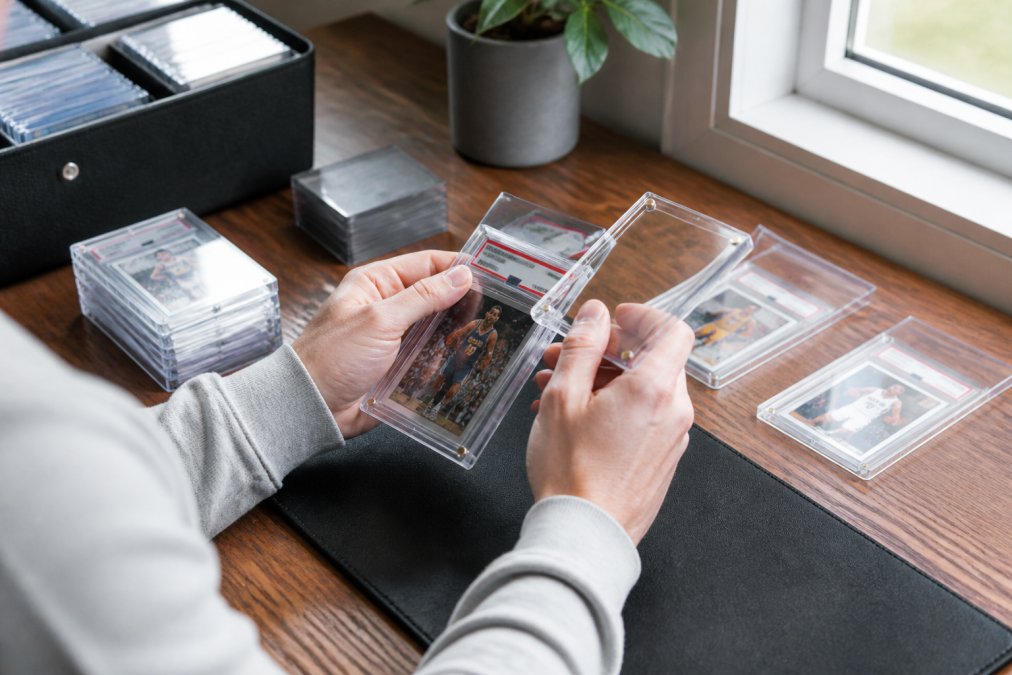
Graded card storage best practices for high-value collections come down to five habits: control light, control humidity, control handling, control stacking, and maintain the cases themselves. Get those right and most long-term damage never happens.
Stackability and Space Efficiency
Stackability matters more than most collectors admit until they run out of shelf space. A case that stacks flat and stays stable lets you store 30 to 40 graded cards in the footprint of a single display row. Magnetic cases with rigid frames stack cleanly because the frame edges align and the panels do not touch. Soft sleeves and bumper guards slide and shift, forcing you to leave gaps and waste shelf or safe space.
Cleaning and Maintaining the Cases Themselves
Case clarity degrades slowly, and most collectors never notice until a display looks dull. The fix is simple maintenance, done correctly.
- Panels: Use a microfiber cloth and a mild plastic-safe cleaner. Avoid paper towels, which scratch, and ammonia-based glass cleaners, which can cloud polycarbonate over time. Spray the cloth, never the case, liquid that wicks into the frame or magnet channel is hard to remove.
- Frames: Wipe with a dry or barely damp cloth. Do not soak. Aluminum frames tolerate a damp wipe; the magnet channels and adhesive cushion strips do not.
- Cushion strips: Inspect annually. Foam and felt strips compress over time and lose their grip, letting the slab shift. Replace worn strips rather than adding a second layer, which can over-tighten the closure.
- Storage rotation: If cards sit in a safe for months, pull them out once or twice a year, check for haze, dust, or strip compression, and reseat as needed. A five-minute annual check catches problems while they are still cosmetic.
Insurance, Valuation, and the Financial Case for Protection
This is the angle most storage guides skip, and for high-end cards it may be the most important one. Insuring a valuable collection usually involves documenting what you own and how it is stored. Insurers and appraisers commonly expect high-value cards to be kept in protective housings that limit handling and environmental exposure, and a collector who can show cards are cased, out of direct light, and stored in a stable environment is in a stronger position if a claim ever comes up.
- Photograph each slab in its case, front and back, with the label legible.
- Record the grade, cert number, and grading company for every card in a spreadsheet or app.
- Note the storage conditions, cased, out of direct sun, stable humidity, because that is what an adjuster or appraiser will ask about.
- Keep receipts for both the cards and the protection. Replacement cost is easier to establish with a paper trail.
Pricing, Insurance, and Long-Term Value Protection
Slab protection pricing is straightforward at PrismGuard Pro: every case is $16.99, one-time purchase, no subscription. For a collection of 40 graded cards, that's a predictable line item rather than a recurring cost.
Frequently Asked Questions
What is the best slab protection for high-end cards?
For high-end PSA, BGS, and CGC slabs, an outer magnetic display case with UV-blocking clear panels, impact-resistant construction, and a precision fit offers the strongest everyday protection. PrismGuard Pro cases block roughly 95% of UV exposure and include cushion strips to reduce rattling. Match the case to your exact grading holder, since PSA, BGS, and CGC slabs have different dimensions. Pair the case with climate-controlled storage and keep slabs out of direct sunlight for the best long-term results.
Do graded card cases provide UV protection?
Many do, but the level varies. PrismGuard Pro cases are designed to block approximately 95% of UV light exposure, which helps reduce fading during display and long-term storage. No case eliminates every source of fading, so keep slabs out of direct sunlight and away from prolonged bright light. For high-value cards, UV protection for graded cards is one of the most important features to check before buying any display or storage case.
How do I prevent scratches on my graded card slabs?
Scratches usually come from slabs rubbing against each other, hard surfaces, or loose storage. An outer case with a snug fit and cushion strips keeps the slab from shifting and protects the slab surface from scuffs. Avoid stacking bare slabs directly, store them in individual protective housings, and clean cases with a soft microfiber cloth. Handling slabs by the edges also reduces surface wear over time.
Are magnetic slab protectors safe for graded cards?
Magnetic slab protectors use small magnets in the case frame to hold the two halves together, not on the card itself. The card stays sealed inside its original grading holder, so the magnet does not touch the card or label. PrismGuard Pro magnetic cases are designed as an outer layer of protection, and collectors use them for display, storage, and transport without opening the graded slab.
What is the best way to store high-end graded cards?
Store graded slabs upright in individual protective cases, in a cool, dry space away from direct sunlight and humidity swings. Use UV-blocking cases for anything on display, and keep the rest in a closed box or cabinet. Graded card storage best practices also include avoiding extreme temperatures, checking cases periodically for dust or scratches, and keeping an inventory list with current values for insurance purposes.