

Table of Contents
- Magnetic Cases vs Toploaders: What Actually Protects Your Cards
- Are Magnetic Cases Safe for Cards? The Real Risks Explained
- How to Choose Magnetic Case Thickness for Your Collection
- Magnetic Slab Case Fit: PSA, BGS, and CGC Compatibility
- Materials, Sleeve Compatibility, and UV Protection
- Safe Shipping and Handling for High-Value Cards
- Frequently Asked Questions
Last Updated: September 20, 2026
Magnetic Cases vs Toploaders: What Actually Protects Your Cards
Ask ten collectors whether magnetic cases are safe for cards and you'll get ten different answers, most of them based on forum hearsay rather than how the products actually work. This guide from PrismGuard Pro cuts through that noise. A magnetic case can mean a holder for a raw card or an outer case for an existing holder. PrismGuard Pro cases are outer protectors: keep the card inside its graded slab or one-touch holder. The One-Touch version fits standard-size one-touch magnetic holders, including BCW; check the holder model before ordering.

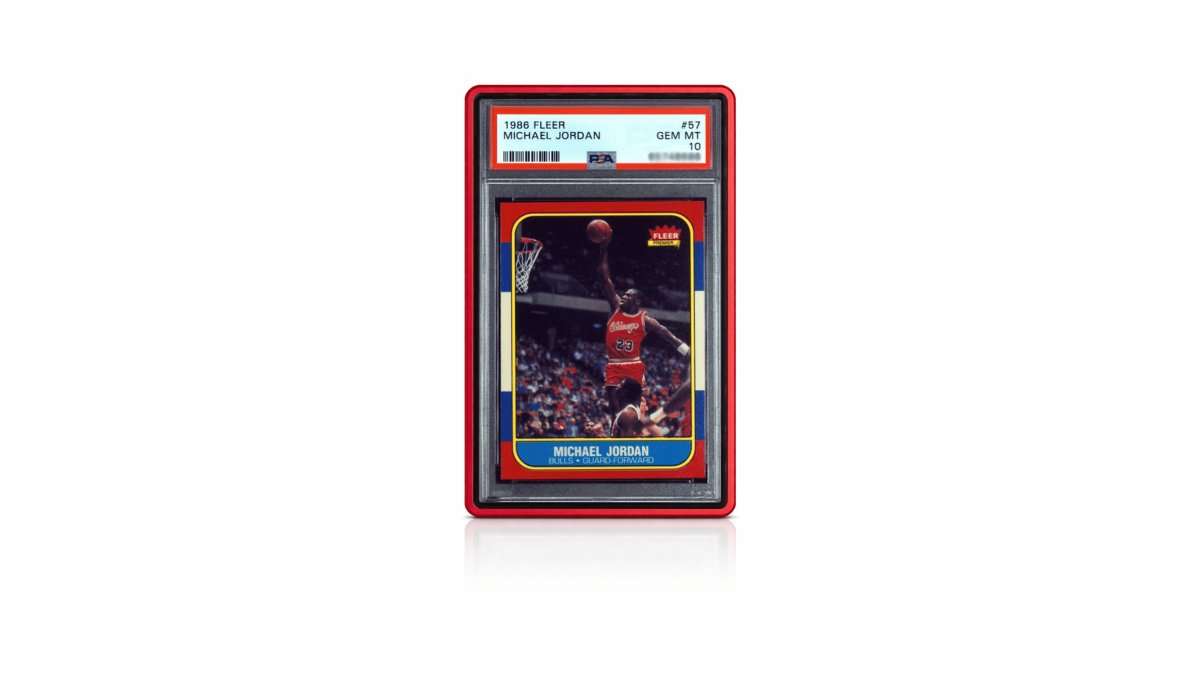
| Feature | Magnetic One-Touch Case | Toploader |
|---|---|---|
| Card movement | Minimal (fixed position) | Slides freely |
| Edge protection | Rigid shell absorbs impact | Flexible walls flex on impact |
| UV protection | Available (up to 95%) | None in standard form |
| Reusability | High, opens and closes repeatedly | Degrades with handling |
| Best for | Display and high-value storage | Bulk sorting and shipping |
Are Magnetic Cases Safe for Cards? The Real Risks Explained
Choose a holder that fits the card or slab and follow its manufacturer’s instructions. Inspect the contact surfaces and closure, and never force a card, sleeve, or graded holder into a case that is too tight.

Will Magnets Damage the Card or Grading Label?
A physical barrier keeps a card from touching a closure magnet, but it does not mean that no magnetic field is present. Use a holder designed for the item and follow the maker’s care instructions. With a PrismGuard Pro outer case, the card stays inside its existing slab or one-touch holder.
How Card Movement and Friction Cause Surface Scratches
Movement is the real enemy. Every time a loose card shifts inside a holder, its surface drags against the plastic. Over months and years, that friction produces surface scratches and edge wear, and on chrome or foil cards even light contact leaves visible marks. A precision-fit magnetic case locks the card or slab in place, so there's no travel and no friction.
How to Choose Magnetic Case Thickness for Your Collection
Thickness is measured in points, where one point equals 1/1000 of an inch. A standard card is roughly 20 points, and the case you buy must match the card's point rating or it will either rattle or bow. Choosing the wrong thickness is the fastest way to defeat the purpose of a rigid holder.
- Raw cards: Match the inner holder to the card’s measured thickness. The PrismGuard Pro One-Touch outer case fits around an existing standard-size one-touch magnetic holder; it is not the raw card’s inner holder.
- Thick memorabilia and patch cards (55-130 pt): Match the case to the card's stated point rating. A 75 pt card in a 35 pt case will bend.
- Graded slabs: Skip thickness matching entirely. Slab cases are sized to the grading company's shell, not the card inside.
Magnetic Slab Case Fit: PSA, BGS, and CGC Compatibility
A magnetic slab case is a holder engineered to the exact exterior dimensions of a graded slab rather than a raw card. Fit matters because grading companies build their slabs to different footprints, and a case cut for one brand will not seat another correctly. PSA, BGS, and CGC each use their own shell dimensions, so "one size fits all" magnetic cases are a compromise at best.

How to Verify Fit Before You Buy
A common pattern among collectors is to measure the slab, not the card. Use calipers or a ruler to record the slab's length, width, and thickness, then compare those numbers to the case's stated interior dimensions. If a manufacturer does not publish interior dimensions, that is a signal the case is not built to a specific slab standard. The second check is the closure: a properly fitted slab case should close with light, even pressure and no rattle when you shake it gently.
What Grading Companies Actually Look For
Grading companies evaluate the card, not the holder, but the holder affects what they see. A card that has been stored in a case that allows movement can arrive with surface scratches or edge wear that lowers its grade, and a card stored in a case that off-gasses plasticizer can arrive with a film that obscures the surface. The practical takeaway is that a precision-fit, PVC-free slab case is not just a display choice; it is part of the card's preservation history.
Materials, Sleeve Compatibility, and UV Protection
Material quality decides whether a case protects a card or slowly damages it. Three factors matter most: the plastic's chemical composition, whether an inner sleeve fits, and how much UV light the case blocks.
Acid-Free, PVC-Free Construction and Why It Matters
Look for acid-free, PVC-free plastic. The reason is chemical, not cosmetic. PVC is a polymer that needs plasticizers to stay flexible, and those plasticizers do not stay put. Over months and years they migrate out of the plastic and onto whatever surface they touch. On a card, that residue shows up as a dull, slightly greasy film that can be difficult to remove without risking the card's finish, and it can affect how a grading company evaluates surface.
Sleeve Compatibility: The Step Most Collectors Skip
Sleeve compatibility depends on the inner holder. Some magnetic holders are specifically designed for sleeved cards; others are sized for unsleeved cards. Check the model’s instructions and available clearance. A graded card stays inside its slab when you place it in a PrismGuard Pro outer case.
Temperature, Humidity, and Long-Term Storage
Heat and humidity do more damage to cards than magnets ever will. High humidity warps paper stock and can loosen adhesives in graded slabs; rapid temperature swings cause condensation inside a sealed case. Store cases in a stable, climate-controlled space away from direct sunlight, and avoid attics and garages where swings are extreme. A case slows the effects of a bad environment, but it does not replace a good one.
Safe Shipping and Handling for High-Value Cards
Shipping is where good storage habits collapse. A card that's perfectly protected on a shelf can still arrive damaged if the case moves inside the box, so the case is only half the job. Pack the case so it cannot shift: wrap it in bubble wrap, place it in a rigid box, and fill any void so the case stays centered.
- Card seated in a perfect-fit inner sleeve
- Card or slab locked in a precision-fit magnetic case
- Case wrapped in bubble wrap, taped so it can't slide
- Rigid outer box with no empty space
- "Fragile" marking and tracking on the shipment
Frequently Asked Questions
Do magnetic card holders damage the surface of trading cards?
An incorrectly sized or dirty holder can damage a card. Follow the holder manufacturer’s instructions and use an inner sleeve only when the model is designed to accommodate it. A PrismGuard Pro outer case goes around an existing holder; do not place a bare card directly inside it.
Are magnetic cases safe for long-term storage of sports cards?
Yes, if the case is acid-free and PVC-free. Those two properties prevent chemical reactions that discolor or degrade card stock over years. Look for cases that block UV light, since fading is one of the main threats to displayed cards. PrismGuard Pro cases block roughly 95% of UV exposure and use impact-resistant materials, which makes them suitable for both display and archival storage. Avoid cheap cases with unclear material specs.
What is the difference between a magnetic case and a toploader?
A toploader is a rigid plastic sleeve open at the top, cheap and effective for storage, but it offers no UV protection and allows some card movement. A one touch magnetic case is a two-piece holder with interlocking lips and a magnetic closure that seals the card inside. Magnetic cases provide a tighter fit, better display clarity, and usually UV-blocking material. Toploaders cost less, but magnetic cases do more for high-value cards.
How do I choose the right thickness for a magnetic card case?
For a raw-card holder, measure the card’s thickness and choose the maker’s corresponding point size. Check sleeve compatibility separately. For a PrismGuard Pro outer case, choose by the existing graded slab or one-touch holder’s model and dimensions, not the raw card’s point size.
Protecting a collection comes down to controlling the things you can: movement, light, and chemistry. PrismGuard Pro builds cases around exactly those variables, with 95% UV protection, impact-resistant shells, a precision fit for PSA, BGS, and CGC slabs, and a secure magnetic closure that keeps cards fixed without touching the magnets. Get started with PrismGuard Pro and give your graded cards and one-touch displays the stable, archival-quality protection they've earned.