

Table of Contents
- What Makes a Premium Protective Case for BGS Slabs Worth Buying
- BGS Slab Protector Fit: Matching Case Thickness to Your Slab
- Magnetic Metal Slab Case Construction: Aluminum Frames and Clear Panels
- BGS Slab UV Protector: What 95% UV Blocking Actually Means
- PSA and BGS Slab Case Compatibility: One Case Does Not Fit All
- Pricing and Value: What You Pay for Premium BGS Slab Protection
- Common Mistakes Collectors Make When Buying BGS Slab Cases
- Conclusion
- Frequently Asked Questions
Last Updated: October 5, 2026
What Makes a Premium Protective Case for BGS Slabs Worth Buying
A premium protective case for BGS slabs is an outer shell that holds a graded card holder without touching the card inside, adding UV filtering, impact resistance, and a display-ready frame. At PrismGuard Pro, we build cases around one idea: the slab does the grading, the case does the protecting.

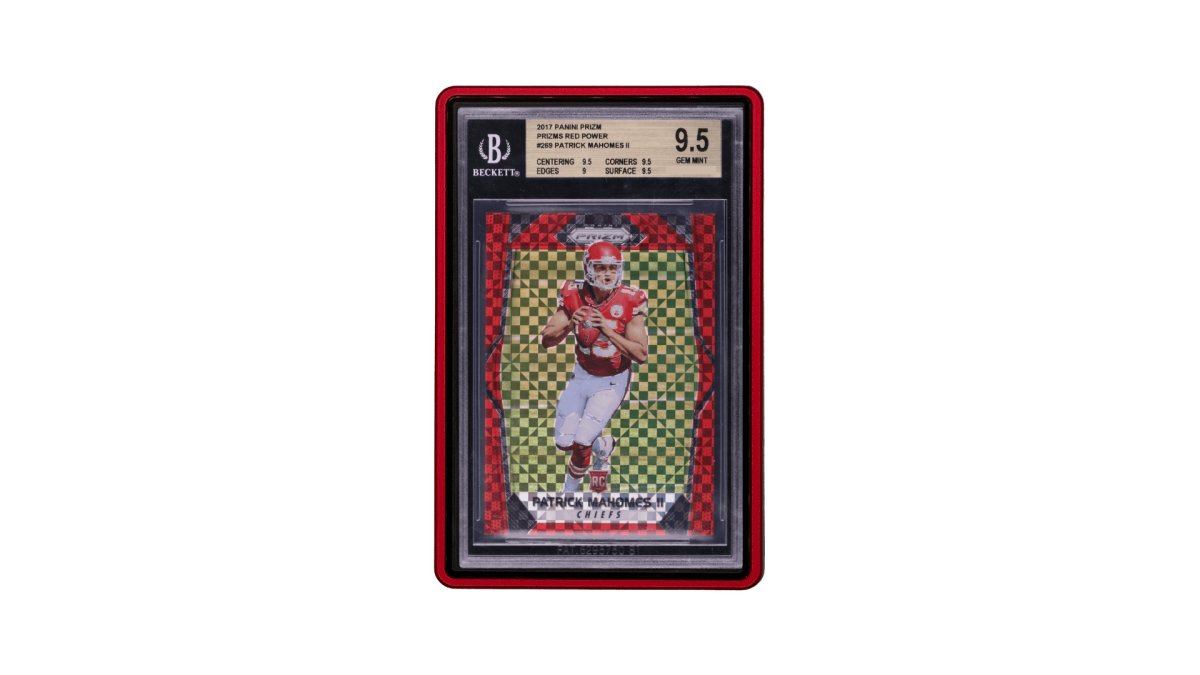
Here's why that distinction matters. A Beckett slab is sealed and sonically welded. Once it's damaged, scratched, or faded, you can't repair it without breaking the grade. The case you choose is the only layer you control.
Three things separate a real protector from a plastic sleeve:
- UV filtering that slows ink fading during display
- A rigid frame that absorbs knocks and drops
- A snug fit that stops the slab from sliding or rattling
What most guides miss is that a loose case can be worse than no case. If the slab shifts inside, every handling session grinds the surface against the shell.
BGS Slab Protector Fit: Matching Case Thickness to Your Slab
Fit is the single most common reason a BGS slab protector gets returned, and it is the one variable you can control before you buy. Cases are sized in points (PT), where 1 PT equals 0.001 inch. Beckett holders are thicker and have a different footprint than PSA holders, so a PSA case will not work here, and a case that is merely "close" is worse than no case at all.
How to Measure Your Slab in Under a Minute
You do not need a machine shop. A digital caliper gives the cleanest reading, but a steel ruler and a steady hand will get you within a point or two, which is enough to choose a size.
- Thickness. Measure across the sealed edge of the holder, not the face. Take three readings, top, middle, bottom, and use the largest.
- Width and height. Measure the outer footprint edge to edge. Beckett holders are wider than PSA holders, so width is the measurement that catches most mismatches.
- Corner check. Note whether the holder has square or slightly rounded corners; a case cut for one profile can pinch the other.
Write the numbers down. A five-second measurement prevents most returns.
Typical Holder Thickness by Grading Company
The table below reflects the common ranges collectors report. Treat these as starting points, not specifications, always confirm against your own slab.
| Holder Type | Typical Thickness | Typical Footprint | Case to Choose |
|---|---|---|---|
| Standard Beckett (BGS) slab | ~130PT | Wider than PSA | BGS-specific magnetic case |
| PSA slab | ~55PT | Narrower than BGS | PSA-specific case |
| Thin card / One Touch | 35PT | Card-sized | 35PT One Touch case |
| Thicker memorabilia holders | 55PT-130PT+ | Varies | Match by measured thickness |
Why "Size Up" Is Usually the Safer Call
If your measurement lands between two sizes, choose the larger case and use the included cushion strips to take up the slack. A slab that seats with light pressure and stays put when you turn the case upside down is correctly fitted.
Here is the trade-off most listings skip: an oversized case with cushioning protects the slab, but a case that is too tight can stress the holder's sealed edge every time you insert or remove it.
Fit by Slab Generation
Beckett has produced holders across multiple eras, and older slabs can run slightly thicker or have a marginally different edge profile than current production. If you collect across generations, measure each slab rather than assuming one size fits your whole BGS stack. A common pattern is that a case that fits a modern slab perfectly will feel loose on an older one, cushion strips close that gap.
Magnetic Metal Slab Case Construction: Aluminum Frames and Clear Panels
Construction decides how long a magnetic metal slab case actually lasts. An aluminum alloy frame holds its shape through drops and stacking. A tempered glass or clear panel lets the label and card stay visible without opening the case.
The magnetic closure is the part collectors question most. A well-designed case uses magnets in the frame, not against the card, and the field is far too weak to affect a graded card or its label.
BGS Slab UV Protector: What 95% UV Blocking Actually Means
A BGS slab UV protector blocks a stated share of ultraviolet light, and 95% is a meaningful number, but only if you understand what is being measured. UV is the high-energy portion of sunlight that fades ink, yellows plastic, and breaks down the polymers in a holder. Cutting most of it slows that process during display. It does not stop it.
What "95% Blocking" Actually Refers To
UV-blocking figures are typically expressed as the percentage of ultraviolet radiation in a defined band (commonly the UVA and UVB ranges) that the panel prevents from passing through. Two things matter when you read a claim:
- The band. A number without a stated wavelength range is marketing, not a specification. Ask which range it covers.
- The test basis. A figure measured on the raw panel material is not the same as a figure measured on the assembled case, where frame edges and gaps can let light past.
Most practitioners find that a well-made case with a genuine UV-filtering panel meaningfully slows fading compared to an unprotected slab on a shelf. What no case does is make a card immune to light. Treat any "100% UV" claim as a red flag, no transparent panel blocks all ultraviolet while remaining clear.
The Trade-Offs UV Protection Brings
Protection is not free, and the honest version includes the costs:
- Glare. UV-filtering panels can add a slight tint or reflectivity that makes photographing a slab harder. Angle the case away from overhead light for clean shots.
- Bulk and weight. A rigid frame with a filtering panel is heavier and thicker than a sleeve, which changes how a stack sits on a shelf.
- Heat. A sealed case can trap warmth if left in direct sun. The panel blocks UV, not infrared, so a case in a hot window still heats up.
That last point is the one collectors underestimate. Heat and humidity warp holders and accelerate fading, and no case fully cancels that out.
How to Verify a UV Claim Before You Buy
Because UV performance is hard to confirm from a product photo, look for these signals:
PrismGuard Pro BGS Magnetic Slab Case →
- A stated wavelength range, not just a percentage.
- Language that distinguishes panel performance from assembled-case performance.
- A willingness to say what the case does not block.
If a listing only says "UV protection" with no range or basis, treat it as an unverified claim rather than a specification.
Storage and Display Practices That Compound the Protection
For long-term storage, the combination matters more than the case alone:
- Display away from windows and direct sun, and rotate which slabs sit in the brightest spot.
- Keep the room at a stable temperature and moderate humidity.
- Store the rest of your collection in a dark, acid-free box rather than on an open shelf.
- Avoid stacking heavy items on top of cases; even rigid frames have limits.
A UV-resistant case buys you time, and time is what preserves value. Pair it with good storage habits and the effect is cumulative.
PSA and BGS Slab Case Compatibility: One Case Does Not Fit All
PSA and BGS slab case compatibility fails because the two grading companies use different holder dimensions. PSA slabs are thinner and a different footprint than Beckett slabs.
This is where collectors waste the most money. They buy a batch of cases, discover half don't fit, and eat the return shipping. Our advice: sort your collection by grading company first, then order by group.
At PrismGuard Pro, we make separate cases for each holder type so you match the case to the slab, not the other way around.
Pricing and Value: What You Pay for Premium BGS Slab Protection
Premium BGS slab protection is priced per case, and the range tracks construction, not branding.
The PrismGuard Pro BGS Magnetic Slab Case is $16.99 for a single case, and each order includes one case plus cushion strips. Cards and slabs shown in photos are not included.
| Option | Price | What You Get |
|---|---|---|
| PrismGuard Pro BGS Magnetic Slab Case | $16.99 | Aluminum frame, clear panels, magnetic closure, cushion strips |
| Budget plastic sleeve | Lowest | Basic scratch barrier, no UV claim |
Value comes down to one question: what is the card worth if the slab gets scratched or faded? For a mid-grade vintage card, a case is cheap insurance.
Common Mistakes Collectors Make When Buying BGS Slab Cases
The biggest mistake is buying by color and price before checking fit. Cases are not universal, and a case that doesn't match your holder type is money wasted.
Other mistakes we see often:
- Assuming PSA and BGS cases are interchangeable. They are not.
- Buying sleeves when you need a rigid case. Sleeves stop scratches; they don't stop drops.
- Ignoring UV claims entirely. Fading is slow and permanent, and it's the damage you can't undo.
- Stacking heavy items on top of cases. Even rigid frames have limits.
- Skipping the measurement step. A five-second check with a ruler prevents most returns.
A durable construction case is worth it for any slab you plan to keep, display, or sell.
Conclusion
Every collector eventually faces the same problem: a slab you can't replace and a shelf that isn't as safe as it looks. Start with our PrismGuard Pro BGS Magnetic Slab Case at $16.99, confirm the fit, and protect the grade you paid for.
The card inside a BGS slab is already protected from handling. Buying a case that matches your holder type, blocks most UV light, and holds the slab snugly is the difference between a collection that holds its value and one that quietly fades on a shelf.
Frequently Asked Questions
Do BGS slabs fit in PSA slab protectors?
No. BGS and PSA slabs have different dimensions, so a case made for one will not fit the other properly. PSA slabs are slightly different in length and thickness than standard BGS holders. Always match your case to the grading company. PrismGuard Pro makes separate cases for BGS, PSA, and CGC holders so you get a snug fit without rattling or forcing the slab.
Are magnetic metal cases safe for graded cards?
Yes. The magnets in a magnetic metal slab case are embedded in the frame and positioned away from the card and grading label. They hold the case closed without contacting the slab surface. The magnetic closure also makes it easy to open and close the case when you want to swap cards or inspect the slab, with no tools required.
Do BGS slab protectors provide UV protection?
The PrismGuard Pro BGS Magnetic Slab Case is designed to block approximately 95% of UV light exposure. That reduces fading during display and long-term storage, but it does not eliminate every source of fading or damage. Keep your cards out of direct sunlight even when they are in a case. UV protection slows fading; it does not stop all environmental wear.
How do you choose the right size case for a BGS slab?
Match the case to your grading holder before choosing a color or style. Standard BGS slabs have specific dimensions, and cases are built for that standard. If you collect slabs from different grading companies, buy cases made for each holder type. PrismGuard Pro includes cushion strips with every case to help secure the slab and reduce movement inside the frame.