

Table of Contents
- Why Impact Resistant Cases for Graded Cards Matter
- Comparison Table: Top Protective Cases for PSA Graded Cards
- 1. PrismGuard Pro PSA Magnetic Slab Case: Best for PSA Collectors
- 2. PrismGuard Pro BGS Magnetic Slab Case: Best for Beckett Slabs
- 3. PrismGuard Pro Magnetic One-Touch Case: Best for Raw Card Holders
- Waterproof Graded Card Storage: What IP67 Ratings Actually Mean
-
How to Store Graded Sports Cards for Long-Term Protection
- 1. Match the case to the holder, and understand why fitment matters
- 2. Block UV light, and understand what UV actually does
- 3. Manage humidity with a target, not a vibe
- 4. Add impact protection sized to the actual risk
- 5. Organize by value, and document for insurance
- 6. Weight-to-protection ratio: the trade-off nobody quantifies
- Frequently Asked Questions
Last Updated: September 28, 2026
Why Impact Resistant Cases for Graded Cards Matter
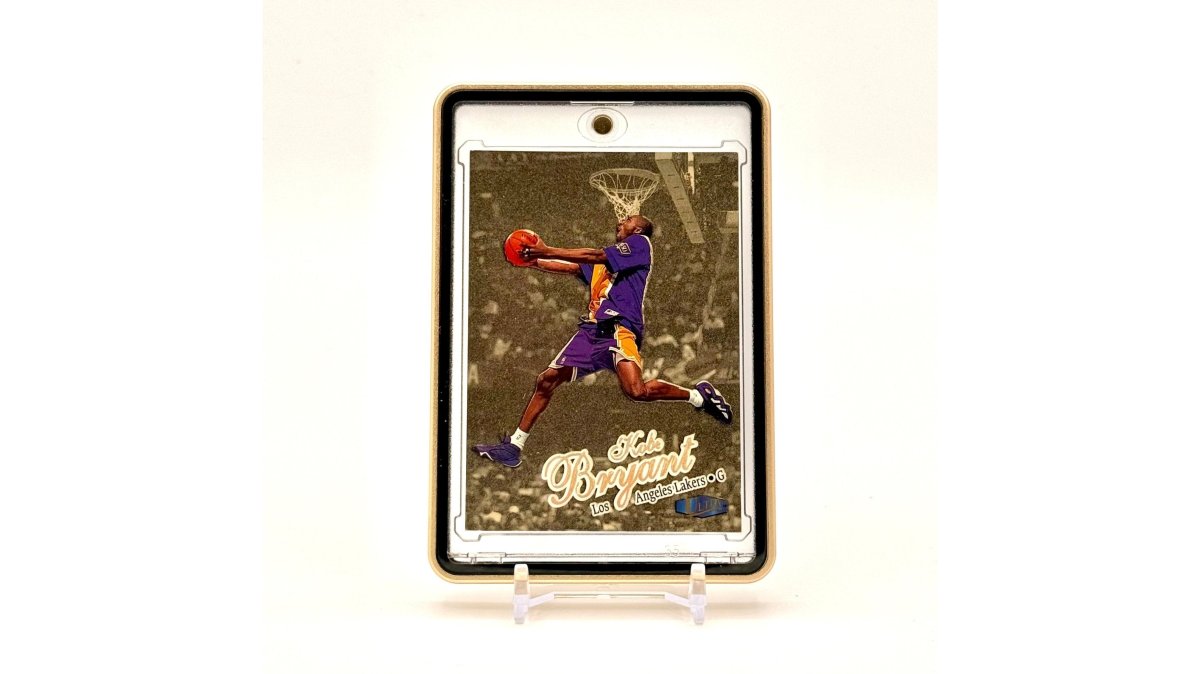
Comparison Table: Top Protective Cases for PSA Graded Cards
These three PrismGuard Pro cases cover the most common holder types. Match the case to your holder first, then pick a color.

| Case | Fits | Price | Best For |
|---|---|---|---|
| PrismGuard Pro PSA Magnetic Slab Case | Standard PSA slabs | $16.99 | PSA collectors |
| PrismGuard Pro BGS Magnetic Slab Case | Standard BGS slabs | $16.99 | Beckett slabs |
| PrismGuard Pro Magnetic One-Touch Case | Standard one-touch holders | $12.99 | Raw card holders |
1. PrismGuard Pro PSA Magnetic Slab Case: Best for PSA Collectors
The PrismGuard Pro PSA Magnetic Slab Case is an outer protective display case built for standard PSA graded card slabs, and the most direct answer to which impact resistant cases fit a PSA slab without rattling.

Pros
- Purpose-built for standard PSA slabs, not a universal fit
- Aluminum frame adds a rigid outer layer for display, storage, and transport
- 95% UV light blocking for shelf display
- Cushion strips included to reduce movement inside the case
Cons
- Sold as the case and cushion strips only; card and slab are not included
- Color availability varies, so a specific shade may sell out
PSA's official card grading and holder information
2. PrismGuard Pro BGS Magnetic Slab Case: Best for Beckett Slabs
Beckett slabs are thicker than PSA holders, so a PSA case will not seat them correctly. The PrismGuard Pro BGS Magnetic Slab Case is built for standard Beckett Grading Services (BGS) graded card slabs, the fit detail most generic cases get wrong.
Pros
- Correct fit for standard BGS holders
- Same 95% UV protection and magnetic closure as the PSA version
- 15 color options for matching a display shelf or a personal theme
Cons
- Will not fit PSA or CGC slabs
- One case per slab, so a large BGS collection adds up
3. PrismGuard Pro Magnetic One-Touch Case: Best for Raw Card Holders
The PrismGuard Pro Magnetic One-Touch Case is an outer protective display case for standard-size one-touch magnetic card holders, including holders from BCW. Your card stays inside its existing holder, and the outer case adds the frame, panels, and closure.
Pros
- Works with standard one-touch magnetic holders you already own
- Lowest price of the three cases
- Same display quality and UV protection as the graded slab versions
Cons
- Designed for standard-size one-touch holders only, not graded slabs
- Card and one-touch holder are not included
Waterproof Graded Card Storage: What IP67 Ratings Actually Mean
An IP67 rating is a two-part claim. The "6" means the enclosure is dust-tight under test; the "7" means it survives temporary immersion in water, typically about one meter deep for thirty minutes. Those figures come from the ingress protection (IP) code system, the same framework NEMA references in its enclosure guidance. The rating is a test result for a sealed enclosure, not a marketing adjective, and it does not transfer to a display case with a magnetic closure.
What actually drives moisture damage in a slab
Moisture damage to graded cards rarely comes from a single soaking event. It comes from sustained relative humidity cycling: the paper label, card stock, and slab's inner sleeve absorb and release moisture as temperature and humidity shift, and over months that cycling can cloud a slab, warp a label, or feed mold. Three variables matter most:
- Relative humidity. Most preservation guidance for paper-based collectibles points to a stable range in the 35-50% RH band. Below roughly 30% RH, paper can become brittle; above roughly 60% RH, mold risk rises sharply.
- Temperature stability. Fluctuation is worse than a steady slightly-warm room, because every temperature swing drives a humidity swing inside the container.
- Barrier quality. A sealed gasketed case slows vapor transmission. A magnetic display case does not.
Matching the container to the threat
| Threat | What actually stops it | What does not |
|---|---|---|
| Dust and shelf grit | Any closed display case | Open-top stands |
| Accidental spills | Sealed gasketed hard case | Magnetic display case |
| Flood or standing water | IP67 sealed case, stored above floor level | Any display case |
| Long-term humidity cycling | Sealed case + desiccant + stable room | Desiccant alone in an open case |
| UV fading | UV-blocking panels + no direct sun | Clear acrylic alone |
Desiccant math that actually works
Silica gel desiccant packs are rated by the volume of air they can condition, not by the number of slabs in the case. Size the desiccant to the case's internal air volume, then replace or recharge it on a schedule rather than waiting for visible moisture. Indicating silica gel, the kind that shifts color as it saturates, removes the guesswork, and rechargeable packs can be dried in an oven per the manufacturer's instructions and reused.
A few practical rules that hold up across climates:
PrismGuard Pro PSA Magnetic Slab Case →
- Keep sealed cases off concrete floors. Concrete wicks ground moisture and radiates it into anything sitting directly on it.
- Avoid basements and garages for long-term storage unless the room is actively climate-controlled.
- Do not seal a slab that is already damp. Let it equilibrate in a dry room before it goes into a sealed case, or you trap the moisture inside.
- Rotate or recharge desiccant on a schedule, every few months in humid climates, less often in dry ones.
NEMA enclosure and ingress protection guidance
The unique angle most guides skip: foam chemistry and long-term slab contact
Almost no buying guide addresses what interior foam does to a slab over years of contact. Foam is not inert: some open-cell foams off-gas and leave a residue or haze on clear plastic, and some closed-cell foams trap moisture against the slab surface. Use foam specified as inert or archival-grade, keep a thin barrier between foam and slab where possible, and inspect stored slabs annually for clouding or surface change.
How to Store Graded Sports Cards for Long-Term Protection
Knowing how to store graded sports cards well comes down to four variables: light, humidity, impact, and organization. Control all four and your slabs hold their condition for years.
1. Match the case to the holder, and understand why fitment matters
PSA, BGS, and one-touch holders each have different external dimensions and corner geometry. A case even a few millimeters too large lets the slab shift inside the shell, and every shift is a friction event against the clear panels, over hundreds of handling cycles that produces the fine surface scratches that make a slab look tired. A case that is too small will not seat the slab flush, stressing the closure and cracking the frame at the corners.
2. Block UV light, and understand what UV actually does
UV radiation breaks chemical bonds in the dyes and inks on card stock and labels. The visible symptom is fading, but damage starts before fading is obvious. Cases that block a high percentage of UV slow the process; they do not stop it. Keep shelves out of direct sun, and if a display area gets strong afternoon light, add UV-filtering window film as a second layer.
3. Manage humidity with a target, not a vibe
Store in a climate-controlled room, use desiccant packs in sealed containers, and avoid basements and garages. The target range for paper-based collectibles is roughly 35-50% relative humidity, held as steady as possible, stability matters as much as the number, because every temperature swing drives a humidity swing inside the container. A cheap hygrometer is the single highest-value tool a collector can buy.
4. Add impact protection sized to the actual risk
Outer cases with aluminum frames and cushion strips absorb drops and transit bumps, but the right amount of protection depends on how the collection moves. A shelf display needs almost none beyond dust and UV; a card show bag set down on concrete needs a rigid frame and cushioning; a shipped slab needs a rigid outer shell plus padding that prevents movement inside the box.
5. Organize by value, and document for insurance
Keep your highest-value slabs in the most protective cases and store them together for easier inventory checks. Then document them: photograph each slab, record the certification number, and keep a written inventory with acquisition dates and values. Check whether your homeowner's or renter's policy covers collectibles, many standard policies cap collectible coverage at a low limit, and a scheduled rider or dedicated collectibles policy is often the only way to insure a high-value collection at full value.
Consumer guidance on insuring collectibles
6. Weight-to-protection ratio: the trade-off nobody quantifies
Protection and portability pull in opposite directions, and the right balance depends on how you use the collection.
- Display-only slabs. Weight is nearly irrelevant. Choose the most rigid case you can afford and prioritize UV blocking and fitment.
- Show-and-travel slabs. Every ounce matters if you carry a bag for hours. A lighter case with a rigid frame and good cushioning usually beats a heavier case that you leave at home because it is a burden.
- Shipped slabs. Weight is less important than rigidity and internal immobilization. A heavy case that lets the slab move inside is worse than a lighter case that holds it still.
- Bulk storage. For a large collection, the weight of the case multiplies by the number of slabs. A 40-slab box in heavy cases becomes a two-person lift; the same 40 slabs in mid-weight cases stay manageable.
Frequently Asked Questions
What is the best case for storing graded cards?
The best case depends on your slab type. For PSA slabs, the PrismGuard Pro PSA Magnetic Slab Case offers a precision fit with an aluminum frame and magnetic closure. For BGS slabs, the PrismGuard Pro BGS Magnetic Slab Case provides the same protection. Both block approximately 95% of UV light and include cushion strips to reduce movement. If you use one-touch magnetic holders, the PrismGuard Pro Magnetic One-Touch Case is a solid choice. Always match the case to your specific holder before buying.
Are PSA slabs waterproof?
PSA slabs themselves are not fully waterproof. The plastic holder protects the card from handling and minor moisture, but it is not sealed against water immersion. For waterproof graded card storage, you need an outer case with an IP67 rating or similar water-resistant construction. PrismGuard Pro cases are not marketed as fully submersible, but they offer 95% UV protection and impact-resistant materials.
Do impact resistant cases prevent UV damage to trading cards?
Impact resistant cases can help reduce UV damage if they are designed with UV-blocking materials. PrismGuard Pro cases block approximately 95% of UV light exposure, which slows fading during display. However, no case eliminates all fading risk. Keep graded cards out of direct sunlight and rotate displays periodically. For long-term storage, combine UV-protective cases with a dark, climate-controlled environment to further protect your investment.
How do I choose the right size case for my graded card?
Match the case to your slab type, not the card itself. PSA slabs, BGS slabs, and CGC slabs have different dimensions, so a case designed for one may not fit another. PrismGuard Pro offers separate cases for PSA and BGS holders, plus a one-touch magnetic case for raw card holders. Check the product description for fit guidance, and if you are unsure, contact the seller with your holder brand and model before ordering.
Can I use impact resistant cases for shipping graded cards?
Yes, impact resistant cases add a layer of protection during shipping, but they are not a substitute for proper packing. Use a sturdy box with bubble wrap or foam padding around the case. PrismGuard Pro cases have an aluminum frame and clear panels that resist impact, but the slab inside can still shift if the package is dropped. For high-value cards, consider double-boxing and adding insurance. Always follow carrier guidelines for insuring collectibles.
Your graded cards are assets, and assets deserve more than a bare slab on a shelf. PrismGuard Pro builds impact resistant cases for graded cards with the fit, UV blocking, and secure magnetic closure that everyday storage demands. Choose the PSA, BGS, or one-touch case that matches your holder, and get the 95% UV protection, precision fit, and aluminum-frame durability your collection needs.